72% of residential land
Single-family-only zoning
Most residential land in Orange County allows exactly one home per lot. Apartments, duplexes, and small courtyard buildings are simply illegal to propose there.
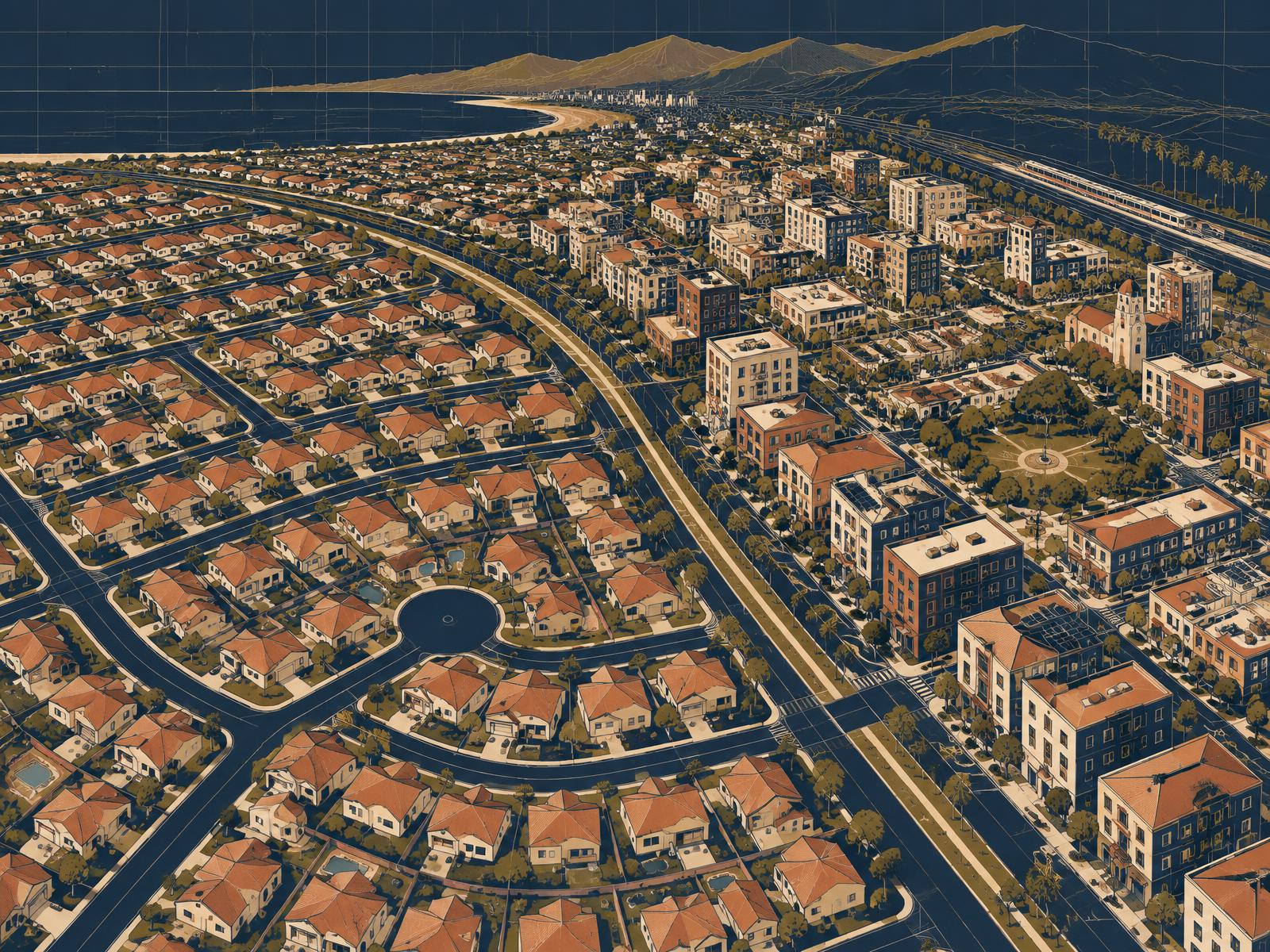
An independent research project
Why Orange County can't build homes, and how smarter planning can fix it.
Orange County does not have a housing shortage by accident — it has one by design, written into its zoning code.
Median OC home price
$0
Median household income
$0
A median home costs 11.5× the median household's annual income. A sustainable ratio is closer to 3×.
The Problem
Orange County's population keeps forming households faster than its cities issue permits. The gap does not close on its own — it compounds into prices.
Annual need derived from the 6th cycle RHNA allocation; permits from HCD annual progress reports.
Cumulative county-wide target of 183,861 homes vs. permits issued.
Typical Orange County salaries against the $310,000 household income needed to buy a median home.
Why It Happens
Nothing about Orange County's geography prevents housing. Four ordinary planning rules, repeated across 34 cities, do most of the work.
72% of residential land
Most residential land in Orange County allows exactly one home per lot. Apartments, duplexes, and small courtyard buildings are simply illegal to propose there.
2 spaces per unit
Required parking can add $40,000–$90,000 per stall in structured garages, quietly deleting the cheapest units from every project's pro forma.
18–36 months
Discretionary review, CEQA appeals, and design boards stretch approvals for years. Time is interest, and interest becomes rent.
1 in 5 projects downsized
Projects that comply with the zoning code still shrink or die at public hearings, so builders price political risk into every proposal.
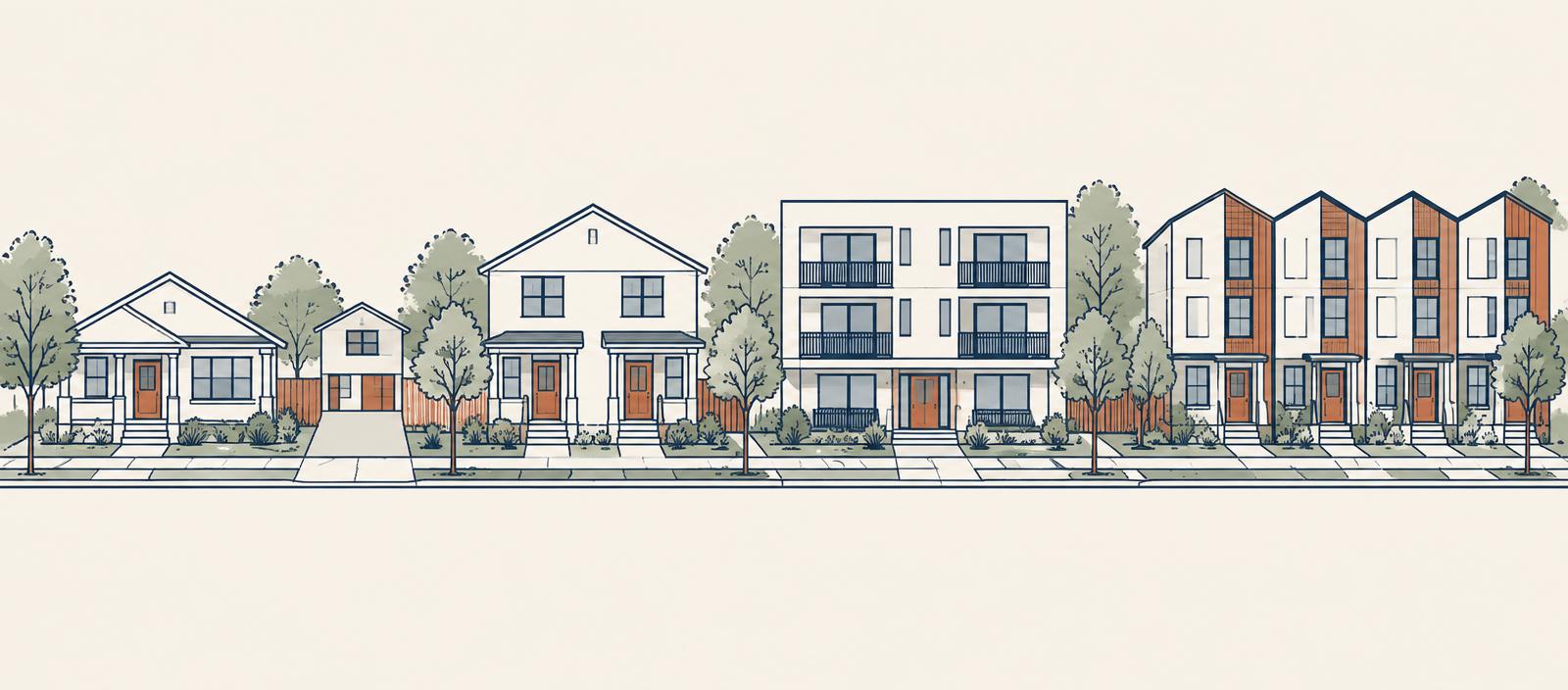
The same 7,200 square feet, under today's rules and under three modest reforms.
One detached home on a 7,200 sq ft lot.
1 home
Backyard accessory dwelling unit, by-right under state law.
2 homes
Lot split plus two units on each half.
4 homes
One building, four modest homes, same footprint.
4 homes
Interactive Tools
Four tools built on the same dataset behind this project. Change the inputs and watch how quickly the math turns.
Assumes 31% of gross income toward housing, a 30-year fixed loan, and 1.45% per year for taxes, insurance, and HOA.
Maximum home price
$491,741
Cities within reach
0 of 7
Estimates a detached accessory dwelling unit at roughly 11% of lot area, with 18% soft costs and 28% operating expenses.
Total cost (792 sq ft)
$355,133
Monthly cash flow
$1,760
Cap rate
5.9%
Payback period
16.8 yrs
Select a city to compare median price, 6th cycle RHNA target, and permits issued so far.
Master-planned; strongest recent production in the county.
Compares new homes created against the county's 6th cycle target of 183,861 homes.
26,000 new homes
51,800 new homes
New homes created
77,800
That is 42% of the county's 183,861-home target — without touching a single acre of open space.
My Proposal
Each part is already law somewhere in the United States. Together they would let Orange County grow without replacing what people love about it.
Part One
Most of the residential area in Orange County has zoning that allows for one home per parcel of land. That means the law prohibits the construction of duplexes, triplexes, fourplexes, and small courtyard style multi-unit buildings on most parcels of land currently being used by people. Allowing for up to four homes on each residential property will be possible (as long as they are built no taller or with greater setback requirements than a larger single family residence) through this proposed ordinance change; however, the individual cities will determine their own design standards. While the State Backstop is important to note since SB-9 was passed in 2021 allowing duplexes and lot splits, many cities added "fees" and "conditions" which made it difficult for many developers to make the project financially viable. Without the State Backstop, local hearings could cause the intent of the proposed ordinance to die.
Est. impact: +38,000 homes over 8 years
Who would need to act: city councils, with state backstop
Part Two
Right now, a project that satisfies all the written rules of zoning in local ordinances may be delayed for as long as one year or longer because of hearings, appeals and requests for additional studies. Each month that the project remains delayed results in increased interest charges and construction costs; therefore, developers are forced to either charge these costs to their tenants/renters or simply choose not to develop. A “by right” approval process is where an approved developer has followed the approved code and the Planning Department approves the developer’s plan prior to a public hearing and/or city council vote. In this scenario, neighbors will have input into what development occurs within the area, however, neighbors will have opportunity to influence the development through participation in the initial code writing process versus battling each new development proposal.
Est. impact: 12–20 months cut from typical timelines
Who would need to act: city planning departments and the Legislature
Part Three
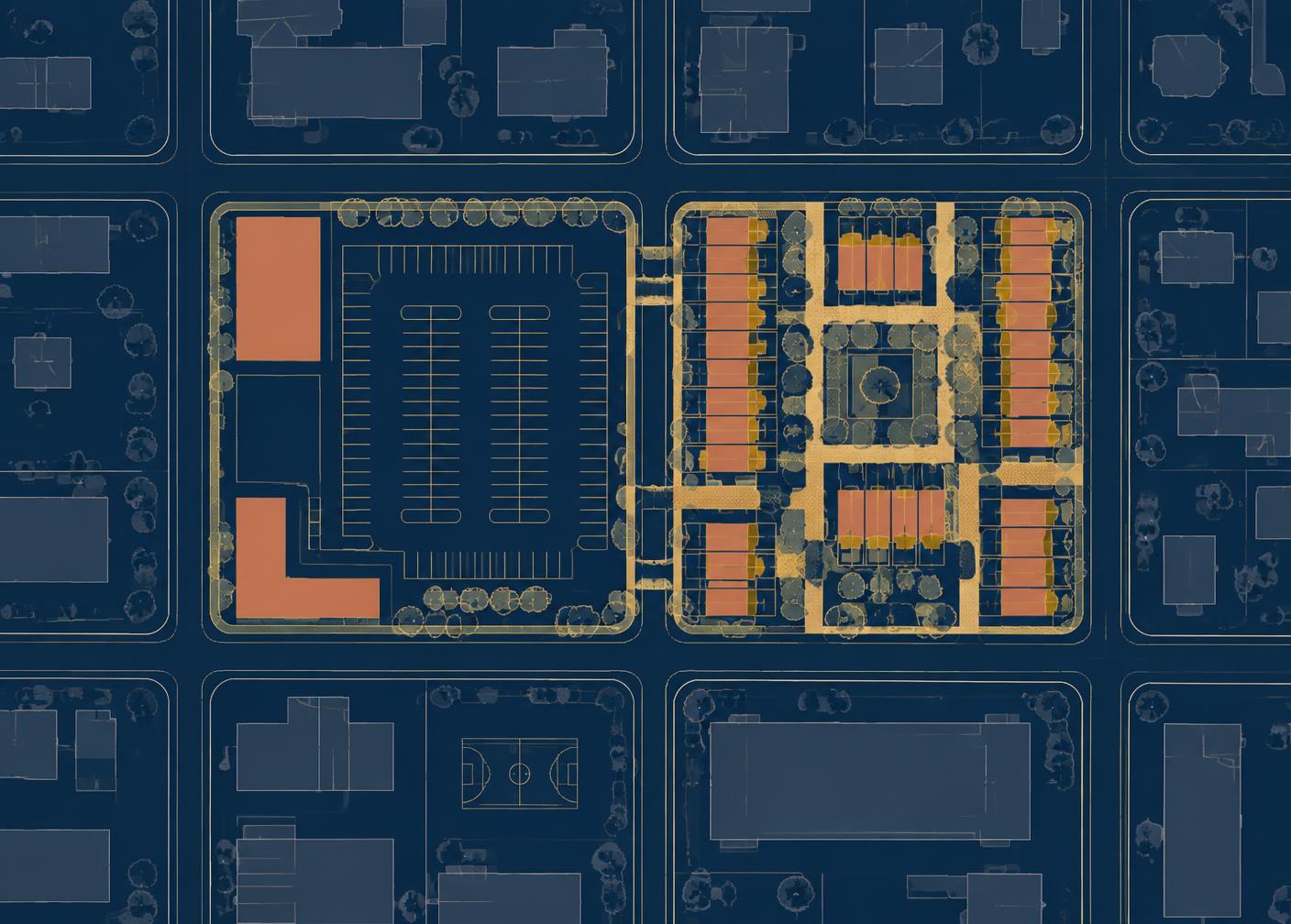
Many of the major thoroughfares in Orange County include strip malls, abandoned big-box stores and under-occupied office park space. The areas that these types of developments occur often sit on very large parcels of land with abundant parking. While much of this area is zoned strictly for business or commerce; therefore, even when all businesses fail, no owner can develop housing within those zones. This proposed legislation will allow property owners to develop multi-unit apartment complexes and/or mixed-use developments at current shopping center locations without having to go through the time consuming rezoning process as allowed by AB 2011 enacted into law in 2022. Furthermore, since most of these corridors currently support bus service, sewer and road capacity exists, thereby placing additional density away from local residents living on smaller, quieter neighborhood streets. Owners of properties will make the decision to redevelop; municipalities will establish rules governing redevelopment; and neighbors of each development will be able to provide input relative to appearance and connectivity of the newly developed structures to their existing community.
Est. impact: +45,000 homes on underused land
Who would need to act: city councils, landowners, homeowners
Case Studies
2040 Plan, adopted 2019
Ended single-family-only zoning city-wide and abolished parking minimums.
Rents rose ~1% while the rest of Minnesota rose ~14% over the same period.
Unitary Plan, 2016
Upzoned roughly three-quarters of residential land for townhouses and small apartments.
Permits tripled; rents for typical units fell an estimated 20–35% below trend.
Lot-size reform, 1998 & 2013
No traditional use zoning; minimum lot sizes cut from 5,000 to 1,400 sq ft.
Tens of thousands of townhomes built; median price roughly a third of OC's.
Methodology & Sources
Prices reflect countywide medians; permit counts come from state annual progress reports; housing targets come from the 6th cycle regional allocation; affordability math uses standard 30-year fixed assumptions.
About the Author
I’m a senior at JSerra Catholic High School in San Juan Capistrano. I was born in Ireland, and I got into housing policy through real estate investing. I started running numbers on rental properties and ADUs in Orange County, and kept finding that the deciding factor wasn’t the market. It was zoning, permit timelines and what the city would allow on the lot.
As an investor, a housing shortage looks like a chance for me because all we do is raise the price. However, it is those same rules that kill good projects as well that cause teachers, vets and young people who have grown up here to not be able to afford living in their hometowns. My goal is to develop a real estate career. If possible, I would much rather develop it in a market that produces enough houses to meet demand than one that makes money off of there not being enough. The quickest method to increase production of housing will be to fix the rules. We will also need no additional dollars in new public spending to do this. Since the "How did you get involved in Housing Policy" area is where I think your experience as an investor came from, feel free to replace it with the actual story of how you got interested in housing policy. Since the placeholders said "In your Own Words," I recommend reading these out loud and changing any part that does not sound like you, particularly when applying for school.